The packaging you choose for your small business isn’t just a box or a bag — it’s the moment your customer first touches your brand. Before they see the product, before they read your thank you note, they feel the weight of your mailer, they see the color of your tissue paper, they notice whether you bothered with a sticker or just used sellotape.
Good packaging doesn’t require a huge budget. It requires intention. Here’s how to build a packaging system that looks premium, ships safely, and doesn’t eat your margins.
The Packaging Stack: What Every Order Needs
Think of your packaging as a stack of layers, each with a job to do:
- Outer packaging — protects in transit (mailer box, poly mailer, bubble wrap)
- Inner wrapping — creates the unboxing moment (tissue paper, crinkle paper, kraft wrap)
- Brand touchpoints — communicates your identity (stickers, labels, ribbon)
- Inserts — adds value and drives repeat purchase (thank you cards, discount codes, care instructions)
You don’t need all four layers for every order, but knowing the stack helps you make deliberate choices about where to invest.
Outer Packaging: Protect First, Brand Second
Your outer packaging needs to survive a distribution centre, a delivery van, and a front doorstep in the rain. Choose based on what you’re shipping:
- Rigid products: Corrugated mailer boxes (single-wall for light items, double-wall for heavy or fragile)
- Soft goods: Poly mailers — lightweight, cheap, and more sustainable than bubble wrap for non-fragile items
- Flat printed goods: Rigid board-backed envelopes to prevent bending
Pro tip: Order mailer boxes in a size that fits your most common product with minimal void fill. Over-packaged orders waste material and look amateur.
Inner Wrapping: The Unboxing Moment
This is where the emotion lives. A customer who films their unboxing and posts it on Instagram is doing it because of this layer.
- Tissue paper in your brand color, folded neatly around the product
- Crinkle paper as a base layer in gift boxes — adds texture and protects
- Kraft paper wrap tied with twine for a handmade, artisan feel
A single sheet of branded tissue paper (printed with your logo or a subtle pattern) costs pennies per sheet in bulk but looks wildly expensive. It’s one of the highest-ROI packaging investments for small businesses.
Brand Touchpoints: Your Identity, Physically
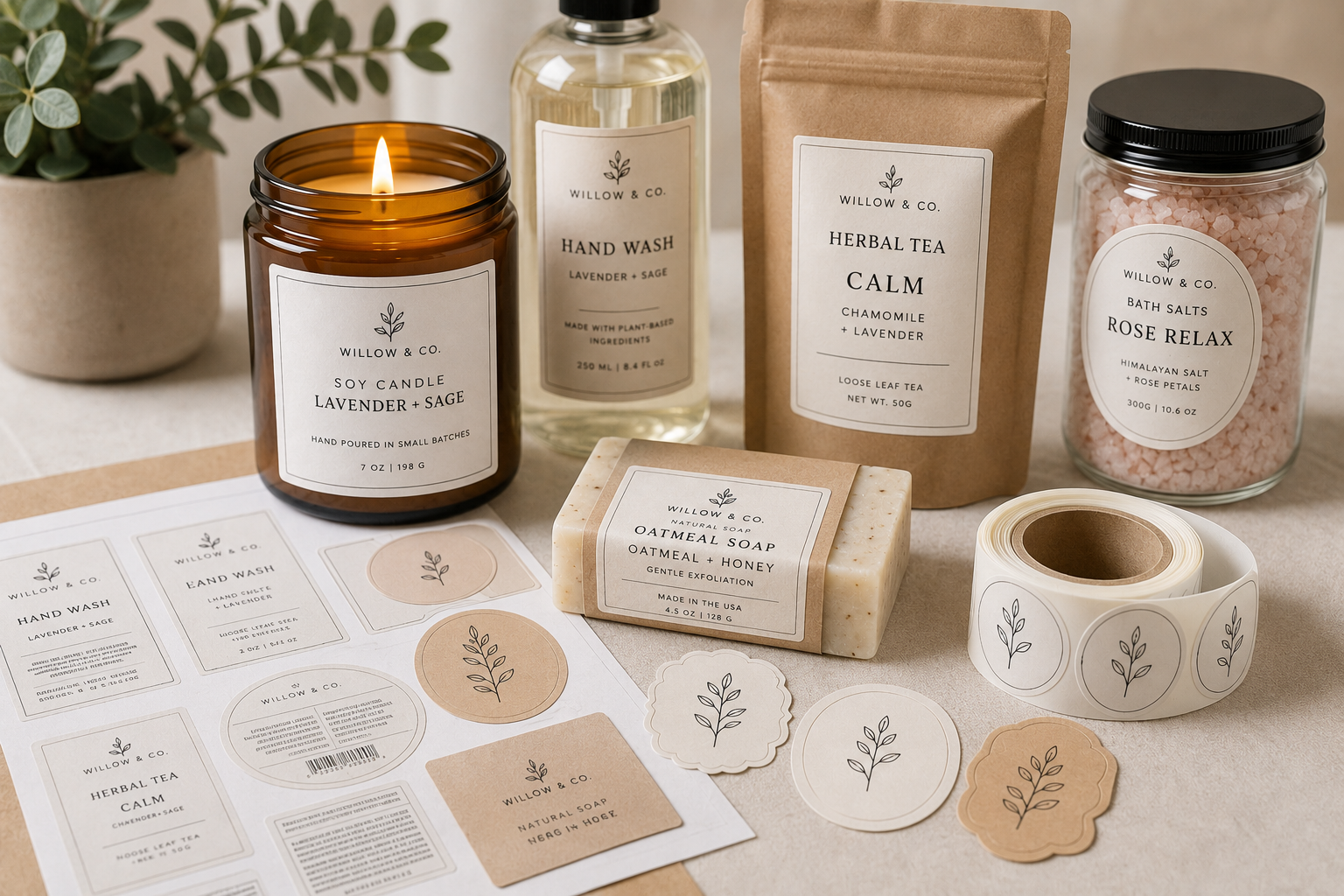
This is where stickers, labels, and tags come in. Every order should have at least one physical brand touchpoint:
- A logo sticker to seal the tissue paper
- A product label with your business name, website, and any legal info
- A gift tag tied to the product or the wrapping
These elements don’t need to be expensive — printable versions from TagPrintly cost a fraction of commercially printed alternatives and look just as professional when printed on quality card stock.
Inserts: The Element That Drives Repeat Business
A thank you card tucked into every order is the single most effective customer retention tool in e-commerce packaging. It’s personal. It’s physical. And it creates a moment of connection that a push notification will never replicate.
What to include on a packaging insert:
- A genuine thank you (write it like a human, not a corporation)
- Your social media handles or a hashtag to encourage sharing
- A discount code for their next order
- A QR code to your shop, reviews page, or care instructions
Sustainability: What Actually Matters
Customers increasingly care about packaging waste. But “eco-friendly” is a marketing claim as much as it’s an environmental one. Here’s what genuinely makes a difference:
- Right-size your packaging — eliminating void fill is more impactful than switching to recycled materials
- Use soy-based inks for printed inserts and tags
- Choose packaging that’s curbside recyclable in your customer’s region (not just technically recyclable)
- Tell the customer how to recycle your packaging — most people won’t know without being told
FAQ
How much should I spend on packaging per order?
A good target is 8–12% of your product’s selling price on packaging. So a £20 product warrants £1.60–2.40 in packaging. Adjust based on your margins and brand positioning.
Should I include a packing slip or invoice in the box?
For B2C orders, a printed thank you card serves the same psychological purpose as a packing slip but with far more warmth. If you ship to business customers, include a professional invoice.
Where do I source small-run custom packaging?
For small runs (under 500 units), check Packhelp, Sticker Mule for labels and stickers, and Noissue for tissue paper. For printable inserts and tags, TagPrintly offers commercial-licence templates you can print on demand.